
Dearborn Heights Root Zone Calculation for TPZ Fencing Compliance
Proper root zone calculations are critical for construction projects near mature trees in Dearborn Heights neighborhoods like Central Dearborn Heights and Riverside Drive. Our TPZ fencing compliance guide helps contractors navigate municipal regulations around historic brick bungalows and institutional landmarks like City Hall. Telegraph Temporary Fencing provides precise CRZ measurements to protect tree health while meeting local ordinances.
Root Zone Calculation for TPZ Fencing in Dearborn Heights
In Dearborn Heights, accurate root zone calculation ensures your tree protection zone (TPZ) fencing meets municipal standards and safeguards critical root systems. We start by identifying the tree’s trunk diameter at breast height—then apply the standard multiplier of 1.5 feet per inch of DBH to determine the minimum protection radius. This is especially vital in older neighborhoods like Berwyn and along Riverside Drive, where mature trees near construction zones need buffer space. Our crew uses this method on every TPZ rental job to stay compliant with local ordinances and DEQ guidelines.
Calculation Steps
- Confirm tree species and trunk diameter at breast height (DBH)
- Measure radial distance from trunk based on local Dearborn Heights TPZ requirements
- Account for adjacent infrastructure like sidewalks or utility lines near the Canfield Community Center
| Trunk Diameter (inches) | Minimum TPZ Radius (feet) |
|---|---|
| 6 | 9 |
| 10 | 15 |
| 18 | 27 |
Root Zone Calculation for TPZ Fencing: Compliance Guide
Root Zone Calculation is a quantitative assessment method that establishes the mandatory protective radius around trees on construction sites. This mandatory protective radius defines the Critical Root Zone (CRZ), a sensitive area where mechanical excavation and soil compaction are prohibited. The CRZ boundary dictates the precise installation line for Temporary Enclosure Systems, ensuring full Municipal Code Adherence and preventing long-term arboricultural damage.
Key Terminology
- TPZ radius
- The circular distance measured from a tree trunk in Dearborn Heights, used to mark where fencing keeps grading and foot traffic out of the root zone.
- root flare
- The widened base at the trunk in Riverside Drive that sets the starting point for TPZ measurements and exposes where roots begin near the surface.
- dripline
- The outer edge of canopy spread in Berwyn, often used as a field reference when estimating where feeder roots extend under soil.
- survey stake
- A marked point along the Telegraph Commercial Corridor used to transfer TPZ measurements onto the ground before fence installation.
- tree protection zone fencing
- Temporary barrier installed around trees near John F. Kennedy, Jr. Library to keep equipment, storage, and compaction out of protected soil.
- compaction buffer
- Extra clearance added in Dearborn Heights to reduce soil pressure from carts, pallets, and fence bases near sensitive roots.
In Simple Terms
Root zone calculation starts at the trunk flare, not the canopy edge, and the fence line follows the protected radius set by local tree protection rules in Dearborn Heights. On jobs near Riverside Drive, Berwyn, and the Telegraph Commercial Corridor, crews measure from the trunk, add a working buffer for base placement, and keep access paths outside the TPZ. At the John F. Kennedy, Jr. Library site, that means matching the layout to the tree protection plan, then checking for utility conflicts, grade changes, and gate locations before panels go in. For setup details, use tree protection ordinances in Dearborn Heights, tree protection zones in Berwyn, concrete steel bases on Telegraph Commercial Corridor, zero trip hazard fittings near Riverside Drive, fence blow over prevention at John F. Kennedy, Jr. Library, and surveying vs fencing in Dearborn Heights.
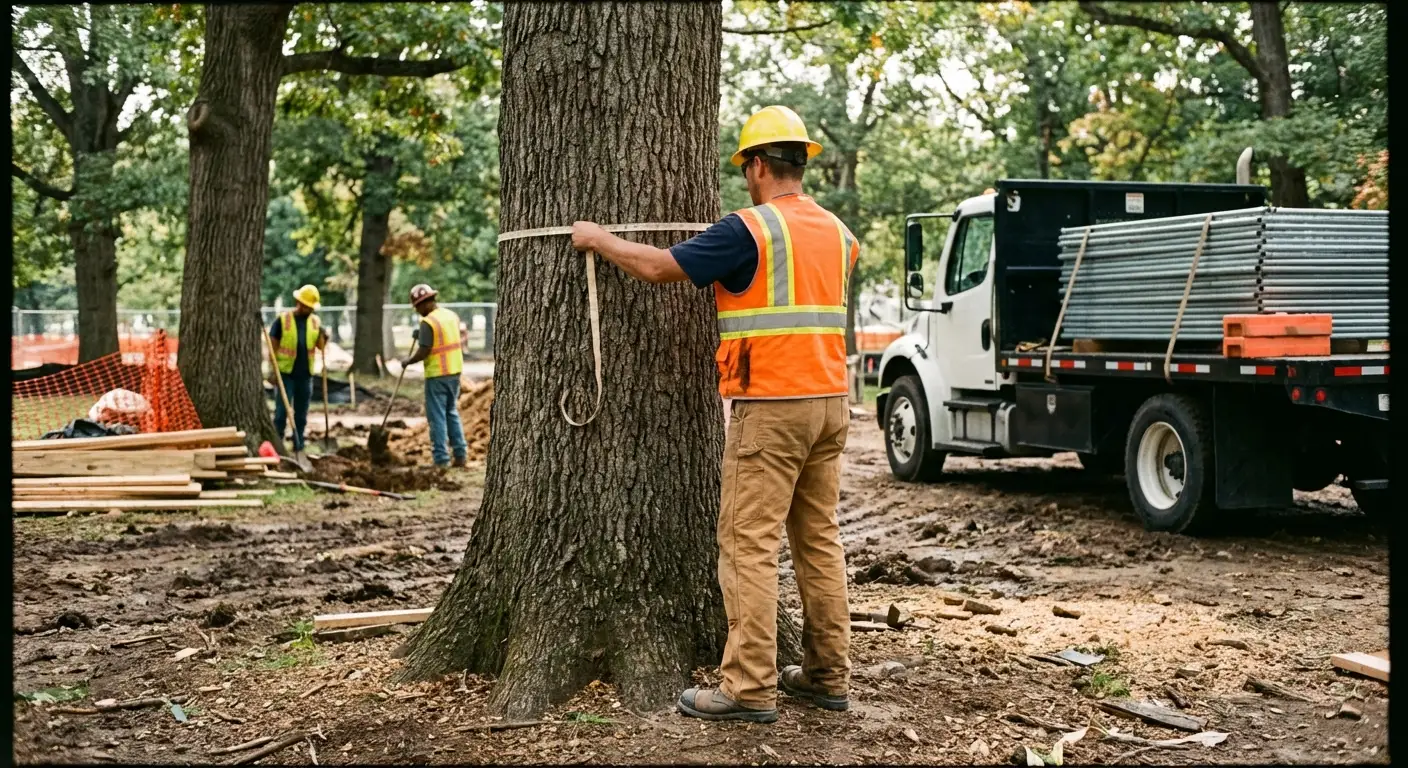
Root Zone Calculation and TPZ Fencing Standards
Technical specifications for establishing Tree Protection Zones near Riverside Drive properties to prevent root damage during construction projects in Dearborn Heights, MI.
| TPZ Radius Calculation Method | Critical Root Zone (CRZ) standard |
|---|---|
| Fencing Installation Cost | $450-$850 per linear foot |
| Soil Disturbance Assessment | EPA compliance monitoring |
| Site Survey Fee | $300-$550 per site |
| Material Mobilization | $150-$300 per deployment |
| Compliance Documentation | $200-$400 per report |
| Signage Interval | Every 30 linear feet |
Root Zone Calculation for TPZ Fencing in Dearborn Heights — Part 2
Ensure compliance with local tree protection zone regulations.
Common TPZ Calculation Blunders That Kill Trees and Budgets
We've seen crews in the Telegraph Commercial Corridor treat tree zones like suggestions. One wrong measurement turns a simple job into a massive headache involving city inspectors and dead landscape.
Guessing the Tree Protection Zone (TPZ) radius
You'll likely encroach on critical root systems. This causes root dieback or tree death, leading to massive fines from city inspectors and expensive tree replacement costs for your project.
Use actual trunk diameter measurements to calculate the radius. We recommend checking tree protection ordinances before setting any posts.
Driving stakes directly into the root zone
Piercing major structural roots kills the tree's ability to take up water. One wrong strike with a sledgehammer can destabilize a tree that's stood for decades in District 7 Area.
Switch to surface-mounted concrete steel bases. These sit on top of the soil without puncturing the ground.
Storing heavy materials inside the TPZ
Soil compaction squeezes the air out of the ground. Roots can't breathe in compacted dirt, which eventually starves the tree and makes it prone to falling during Michigan storms.
Keep all chain link panels and equipment outside the calculated zone. Designate a specific staging area away from the canopy.
Ignoring the drip line during layout
The drip line often extends further than the trunk suggests. If you ignore this, you'll violate safety standards and damage the most active feeding roots.
Map the drip line first. Use tree protection zones to establish a physical boundary that workers won't cross.
Using standard fencing instead of specialized protection
Ordinary fences don't signal the zone's importance. Workers treat them like any other barrier, leading to accidental equipment intrusion and non-compliance during inspections near Central Dearborn Heights Civic Center.
Install high-visibility tree protection zones. These clearly mark the sensitive area for every crew member on site.
Root Zone Calculation for TPZ Fencing: Compliance Guide — Part 2
In Dearborn Heights, protecting tree root zones (TPZ) during construction isn't just about compliance—it's about respecting the life beneath the soil. We know from experience that calculating the TPZ accurately prevents costly damage and keeps projects on track. Our approach factors in local soil conditions, tree species, and site specifics to ensure fences don’t compromise root health or violate regulations. This careful planning preserves the surrounding environment while supporting safe, durable temporary fencing.
-
Measure the Tree Protection Zone Radius Accurately
Calculating the TPZ radius based on tree species and size is crucial. We use diameter at breast height (DBH) measurements to define the minimum root zone, ensuring fencing placement keeps heavy equipment and foot traffic clear of roots.In PracticeFor a 20-inch DBH oak near Ford Road, we set fencing at least 20 feet out, matching local ordinance requirements and preventing root compaction.
-
Use Durable, Stable Fence Bases That Avoid Soil Disturbance
Fence stability matters without digging or heavy base placement that can damage roots. We prefer concrete steel bases that distribute weight evenly, avoiding soil compression and root injury.In PracticeOn a Riverside Drive project, our crew installed steel bases on compacted gravel, avoiding root damage while maintaining fence stability through heavy winds.
-
Respect Local Ordinances and Environmental Regulations
Adhering to Dearborn Heights’ tree protection codes and EPA guidelines ensures TPZ fencing is compliant. We stay updated on changes and coordinate with city inspectors to keep your site in the clear.In PracticeAt Target & Lowe's Plaza on Ford Road, our fencing met all city requirements, passing inspections without delays or fines due to root zone encroachment.
-
Plan for Weather and Seasonal Challenges
Michigan weather can shift quickly. We schedule TPZ fencing installation during stable conditions and reinforce fencing against wind or snow load. This avoids damage to both fencing and protected root zones.In PracticeAfter a harsh winter like in ’07, we upgraded fencing with wind load resistance to prevent blow-overs near the 1920-1950 bungalows in Berwyn.
We commit to precise root zone calculations and careful installation practices that safeguard trees around construction sites. Our crew works closely with clients in Central Dearborn Heights, Riverside Drive, and Berwyn to meet all local guidelines and protect valuable green spaces. We use proven methods, solid equipment, and field-tested expertise so your TPZ fencing installs right the first time, avoiding delays or costly rework.
FAQ on TPZ Root Zone Calculation in Dearborn Heights
Clear answers on TPZ root zone measurement, fence placement, and field checks for Dearborn Heights sites near Civic Center blocks.
How is TPZ root zone measured around trees in District 7 Area?
Measure the trunk at 4.5 feet above grade, then apply the root protection radius used in District 7 Area tree work. On tight lots near 1920_1950 brick bungalows, field crews map that circle before setting fence posts. Existing grade, curb lines, and driveway edges in Dearborn Heights often change the layout.
What happens when the TPZ overlaps a sidewalk in Central Dearborn Heights?
When the TPZ reaches the sidewalk in Central Dearborn Heights, the fence line follows the larger protected area and keeps post holes out of the root zone. Crews mark the offset, use surface-weighted panels where possible, and avoid trenching near the Civic Center blocks.
How do Riverside Drive conditions affect TPZ fencing layout?
Riverside Drive sits near the Rouge River, so wet soil and sloped ground change how TPZ fencing is set. Temporary fence posts need wider spacing checks, and panels stay clear of saturated roots. Field crews watch for erosion along the river edge and adjust the perimeter before installation.
What tree details are needed for compliance in Dearborn Heights?
Crews need trunk diameter, tree species, canopy spread, and visible root flare from the site in Dearborn Heights. That information helps align the TPZ with OSHA work zones and local tree protection practice. Photos from the Canfield Community Center area or nearby residential blocks help document the setup.
Why does fence placement matter near older 1920_1950 homes?
Older 1920_1950 homes in Dearborn Heights often have shallow utility lines, compacted soil, and roots close to foundations. Fence posts placed too tight can cut feeder roots or hit buried services. The safer layout keeps equipment out of the root zone and leaves room for inspection along the lot line.
What checks are done before TPZ fencing is installed?
Before installation, crews confirm grade changes, tree dripline, access lanes, and any DEQ or OSHA review notes tied to the site. In Central Dearborn Heights and District 7 Area, that means checking drive approaches, lawn slopes, and tree protection boundaries before any panels go in.
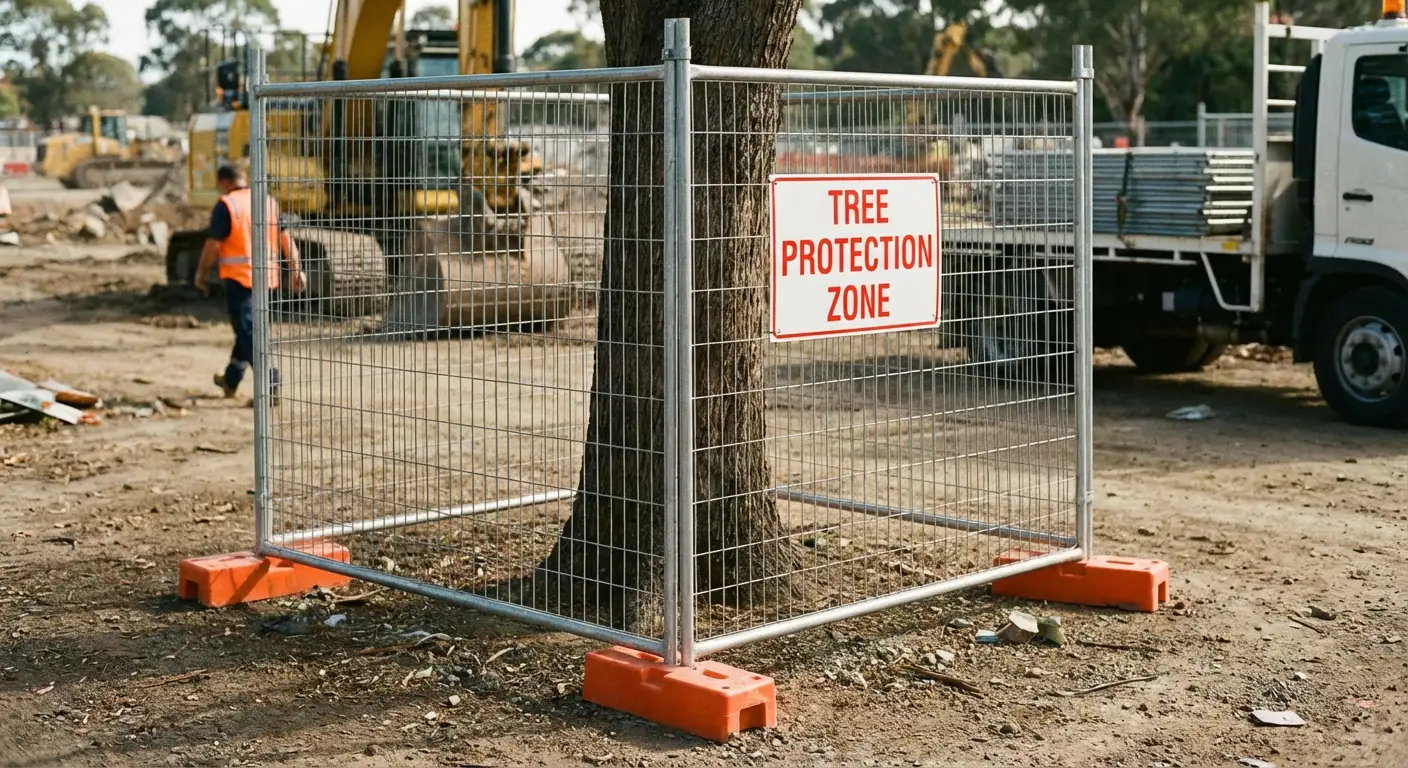
Root Zone Calculation for TPZ Fencing Compliance
Obtain precise root zone measurements for temporary fencing installations throughout Dearborn Heights, MI, to maintain environmental regulatory compliance.
Serving construction sites across the Dearborn Heights area.